Co-Founder & CEO

The EU just adopted its first implementing regulation under the Carbon Removals and Carbon Farming Framework (CRCF), moving Europe's carbon certification system from policy to practice. First methodologies covering agroforestry, peatland rewetting, and afforestation are expected by April 2026—with IFM notably absent from the initial batch. Existing schemes like Verra can apply for recognition starting early 2026. For project developers working in European nature-based solutions, now is the time to understand the requirements and prepare.
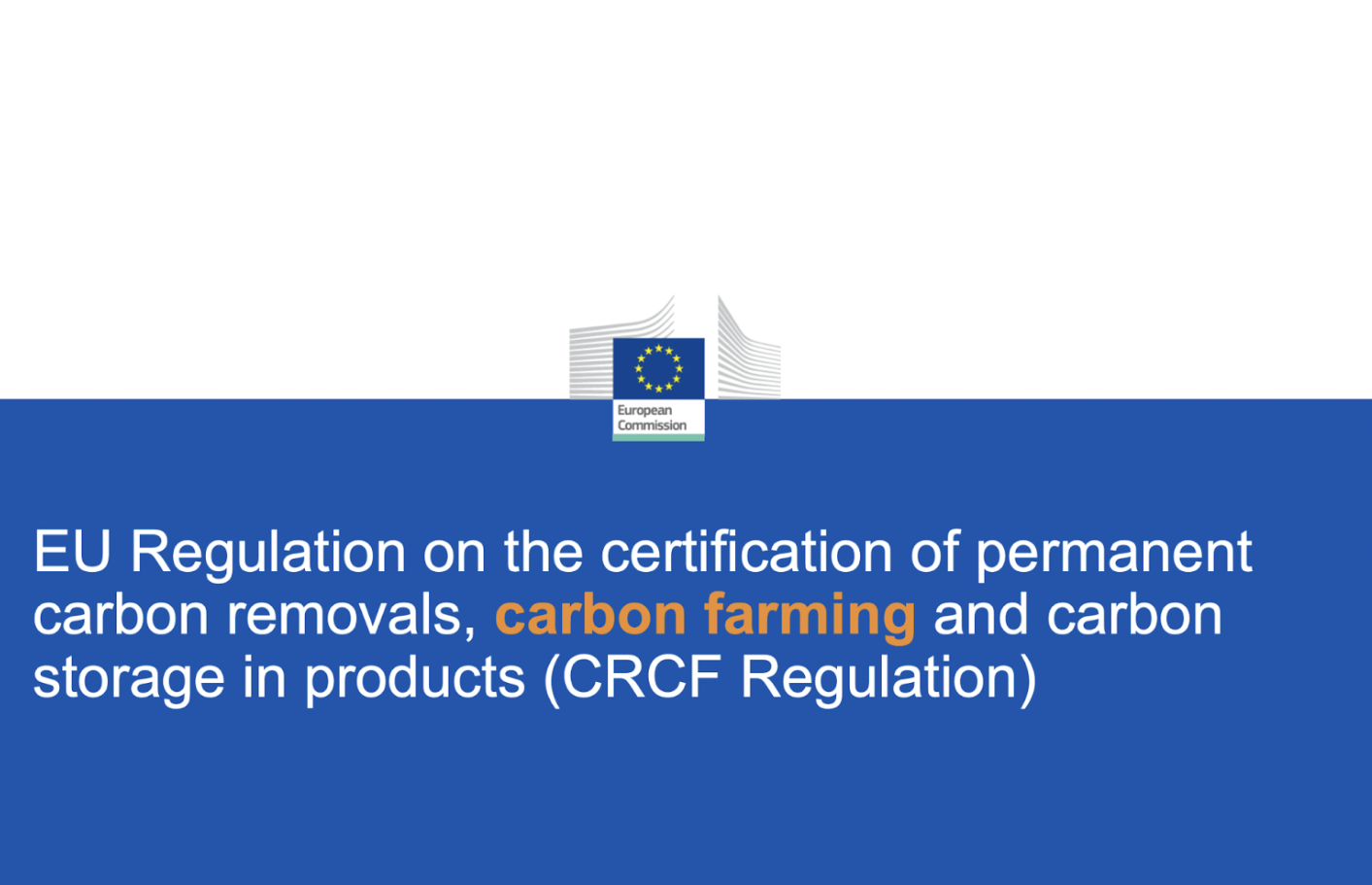
When we last wrote about the EU's Carbon Removals and Carbon Farming Framework (CRCF) in early 2024, the legislation had just reached political agreement. Now, nearly two years later, the framework is transitioning from policy text to operational reality.
In November 2025, the European Commission adopted Implementing Regulation (EU) 2025/2358—the first concrete step toward making the CRCF functional. For project developers, investors, and corporates working in nature-based solutions across Europe, this marks a shift from "what might happen" to "what's happening now."
The CRCF Regulation itself was published in the Official Journal on 6 December 2024, creating the first EU-wide voluntary framework for certifying carbon removals, carbon farming, and carbon storage in products. But a regulation is only as useful as its implementation. The newly adopted Implementing Regulation sets out transparency standards for certification schemes, rules for certification bodies covering appointment, supervision, and audit processes, and complaint-handling procedures requiring schemes to maintain internal monitoring systems. Until the EU-wide registry is operational (expected by 2028), certification schemes will maintain their own registries—but under harmonized rules.
The Commission is now finalizing two delegated regulations for certification methodologies, with adoption expected in early 2026. Permanent carbon removal methodologies will cover Direct Air Capture with Carbon Storage (DACCS), Biogenic Carbon Capture with Storage (BioCCS), and Biochar Carbon Removal. Carbon farming methodologies will address agroforestry, peatland rewetting, and afforestation/reforestation.
Notably absent from this initial set is Improved Forest Management (IFM). Enhanced rock weathering and ocean-based CDR are planned for a second batch, and livestock management methodologies are under assessment with a pilot expected. For those working on ARR or agroforestry projects in Europe, this timeline matters: the first certified units under the CRCF are expected throughout 2026, after methodologies are published in the Official Journal (anticipated around April 2026).
One of the most significant developments for the voluntary carbon market is that existing certification schemes can apply for CRCF recognition starting early 2026. Organizations like Verra or Gold Standard could seek approval—provided they meet the transparency, governance, and audit requirements. If recognized, schemes receive a five-year approval period. This creates a potential bridge between established voluntary market infrastructure and the new EU regulatory framework, though schemes will need to align with specific CRCF methodologies.
Alongside the Implementing Regulation, the Commission announced three initiatives under the EU Bioeconomy Strategy worth watching. The EU Buyers' Club will pool private-sector demand for CRCF-certified credits, with workshops planned for H1 2026. The EU Carbon Farming Database will centralize models, emission factors, remote sensing products, and benchmarking datasets to reduce MRV costs. And a Carbon Storage in Buildings methodology, expected in 2026, will help building owners demonstrate the carbon-storage performance of their structures.
For project developers in Europe, the CRCF creates a new certification pathway with specific implications. Remote sensing is explicitly supported—the regulation references Copernicus satellite data and standardized baselines to cut measuring and reporting costs. Group certification is available to ease the burden for small farmers and foresters. And biodiversity co-benefits are mandatory for carbon farming, though enforcement details are still being developed.
For investors and offtakers, the CRCF is intended to reduce risk through regulatory-backed quality assurance. But timing matters: first certified units won't be available until late 2026, the EU Buyers' Club may influence pricing once operational, and recognition of existing schemes could accelerate supply if major registries achieve approval.
It's worth acknowledging that the CRCF has faced criticism. Analyses by Carbon Market Watch and Öko-Institut have raised concerns that draft methodologies may not meet the integrity standards established by initiatives like the ICVCM. Specific issues include additionality testing that differs from established carbon market standards and baseline rules that some argue could credit non-existent benefits. The Commission has revised methodologies based on Expert Group feedback, and further refinement is expected. For project developers and buyers, this underscores the importance of understanding not just whether a project is CRCF-eligible, but how the specific methodology applies.
Looking ahead, the key dates are: December 2025 for the final draft of permanent removals methodologies, early 2026 for certification scheme recognition applications opening, April 2026 (expected) for the first carbon farming methodologies published in the Official Journal, and 2028 for the EU-wide registry to become operational.
As the CRCF emphasizes remote sensing and standardized baselines, the alignment with Kanop's capabilities is direct. Our AI-powered analysis supports eligibility assessments for afforestation, reforestation, and agroforestry. We provide historical biomass and land cover data for dynamic baselining. And our platform delivers the continuous satellite-based monitoring that CRCF certification will require.
We'll continue tracking CRCF developments as methodologies are finalized. Questions about how this affects your projects? Reach out at hello@kanop.io.